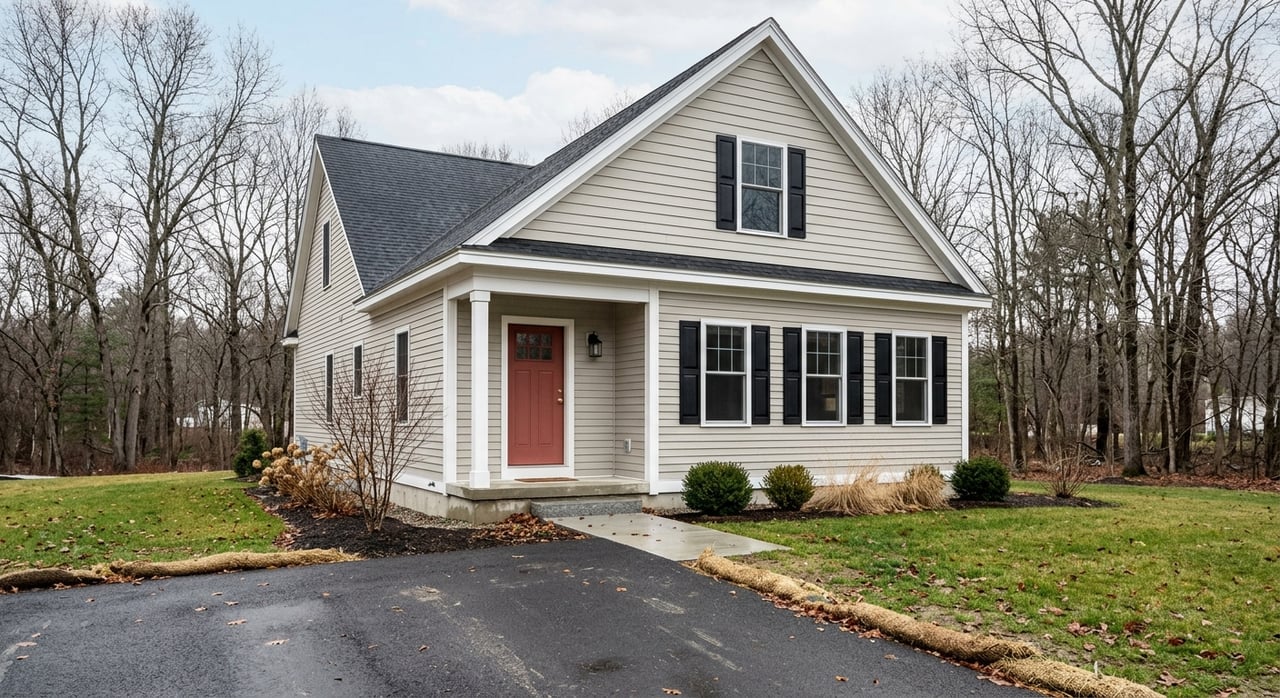
Guide to Killingworth CT Land and New Construction
April 2, 2026
April 2, 2026
Thinking about buying land and building in Killingworth? It can be a smart way to create a home that fits your needs, but it is very different from buying an existing house. In this market, a lot’s value depends on more than size or location. You also need to know whether the land can support a home, septic system, well, and legal access. This guide will help you understand what matters most before you move forward. Let’s dive in.
In Killingworth, buying land is really a site-feasibility decision first and a home-design decision second. The town’s land-use framework is built around rural residential character, groundwater protection, and open-space preservation, with a strong focus on on-site wastewater disposal rather than town-wide sewer service. You can review that approach through the town’s Planning and Zoning Commission and its Plan of Conservation and Development.
That matters because a parcel that looks appealing on paper may still be hard to build on. In Killingworth, soils, wetlands, frontage, and access can all affect whether a lot is actually usable for your plans.
In the Rural Residence District, the key standard is a two-acre equivalent minimum buildable lot area. The zoning code also requires that at least 1.5 acres of that buildable area be made up of contiguous soil classes A, B, C, or D. According to the town’s zoning framework, the effective lot size can range from about two to five acres depending on soil suitability for septic disposal, as outlined in the town code.
This is one reason buyers should not rely on acreage alone. A larger lot may still fall short if too much of the site is constrained by poor soils or other land features.
Standard bulk rules in the Rural Residence District include 200 feet of frontage on a public street or subdivision street, a 200-by-300-foot minimum lot rectangle, 40-foot front setbacks, 30-foot side and rear setbacks, a 35-foot height limit, 10% maximum building coverage, and 20% impervious coverage. These standards come from the Killingworth zoning regulations.
Even if a parcel is technically buildable, these rules affect where a home, driveway, septic area, and other improvements can go. That can shape everything from house size to site orientation.
Not all land area is treated equally. Under the code, wetlands and watercourses do not fully count toward the required minimum buildable lot area, and no more than 25% of that minimum area may be represented by wetlands or watercourse area. The same section of the zoning code also notes that a lot served by an easement or right-of-way generally cannot be built on unless it qualifies under a narrow pre-1957 exception.
That is why two lots with the same acreage can have very different value. One may offer a straightforward path to a home, while the other may bring major limits.
Because Killingworth relies on on-site sewage systems, septic feasibility is one of the biggest issues for land buyers. The town’s Health Department notes that septic tanks must be pumped at least every five years, and its FAQ lists typical tank sizing by bedroom count, including 1,000 gallons for three bedrooms, 1,250 gallons for four bedrooms, and 1,500 gallons for five bedrooms.
At the state level, the Connecticut Department of Public Health says about 40% of residents live in homes served by on-site sewage systems, and most residential systems are approved by local health departments. You can review that framework through the state’s subsurface sewage information.
For you as a buyer, the key point is simple: before closing on land, you want confidence that a septic system can be sited, approved, and sized for the home you want to build.
Private wells are also a major part of the due diligence process. According to the Connecticut Department of Public Health’s private well guidance, private wells are the homeowner’s responsibility, local health departments oversee siting and approval before construction, and buyers should test when purchasing a home and continue regular testing afterward.
The state recommends annual basic indicator testing, and it also notes that arsenic testing is required for all new private and semipublic wells as of October 1, 2022. In addition, the state warns that arsenic can occur naturally in bedrock, which is important in rural settings where clear-looking water may still need treatment or further review.
One of the most helpful clues for land buyers is what the town requires on a zoning application. Killingworth’s zoning application calls for a site plan showing the well, septic, driveways, wetlands, drainage swales, utility lines, easements, and rights-of-way.
That list mirrors the exact issues that can make or break a project. If those elements do not work together on the site, the lot may not support the build you have in mind.
For marginal parcels, the town generally presumes its soil survey maps are correct, but a buyer or applicant may challenge that with a detailed soil survey prepared by a commission-approved engineer or soil scientist at their own expense, according to the town code. In practice, that means professional soils work may be worth considering before you commit to a difficult parcel.
Access is another issue that can be easy to overlook. The town code defines a private road as serving no more than eight lots of four-acre equivalent minimum buildable lot area and being owned by an association of all lot owners.
If you are looking at a subdivision lot or a parcel with nontraditional access, you will want to understand who maintains the road, what rights exist, and whether the access setup aligns with town requirements. Legal access and practical access are not always the same thing.
In Killingworth, the Land Use Department reviews new-construction plans, issues permits and certificates of occupancy, and conducts inspections. State guidance is clear that a permit must be issued before work begins.
The town’s building permit application asks for contractor information, license number, workers’ compensation proof, building plans, and a site plan. If the project changes the footprint, the application also references an inland wetlands application, zoning application, and sanitation review form.
If a parcel is in or near wetlands, the Inland Wetlands and Watercourses Commission may issue, condition, modify, or deny permits for regulated activities. Its role is to protect wetlands, ponds, and streams from damage during construction.
For buyers, that means site work can become more complex before a foundation is ever poured. Wetlands do not always stop a project, but they can affect timing, design, and risk.
Budgeting for new construction means looking beyond the land price and build cost. Killingworth’s building permit fee schedule lists $25.26 for the first $1,000 of project cost and $15.26 for each additional $1,000, rounded up to the nearest $1,000 for fee calculation, according to the permit application. The form also notes that extra zoning fees may apply when zoning approval is required.
Land-record recording fees also affect closing costs. The town clerk lists recording fees effective July 1, 2025, including $70 for the first page plus $5 for each additional page for documents without a nominee, with different fees for documents with a nominee.
When you buy a resale home, your focus is usually on the home’s current condition, inspection findings, and possible updates. When you buy land in Killingworth, your focus shifts earlier to lot feasibility, including zoning, soils, septic capacity, well quality, frontage, access, and wetlands.
That gives you more flexibility to create the home you want, but it also adds uncertainty at the front end. Based on the local approval sequence, new construction usually takes longer than a resale purchase because approvals, planning, utility layout, and inspections all happen before occupancy.
Before you move forward on land or new construction in Killingworth, it helps to ask:
These questions can help you avoid treating land like a standard home purchase. In Killingworth, that distinction matters.
Buying land and building new in Killingworth can be a great fit if you want customization and are prepared for a more detailed process. The biggest advantage is the chance to create a home around your goals. The biggest challenge is that the parcel itself has to pass a series of real-world tests before the project becomes straightforward.
If you are weighing land, new construction, or resale options along the Connecticut Shoreline, working with someone who can help you evaluate the full picture can save time and reduce stress. When you are ready to talk through your next move, connect with Clare Guest for thoughtful, hands-on guidance.
Stay up to date on the latest real estate trends.
Clare is dedicated to making luxury real estate transactions smooth and rewarding. Her focus is on client satisfaction and delivering exceptional results. Contact Clare today for an unparalleled real estate experience.